Best Seller
Handcrafted vs. Cast Iron Turbo Manifolds: Fluid Dynamics, Metallurgy, and Turbo Spool Efficiency
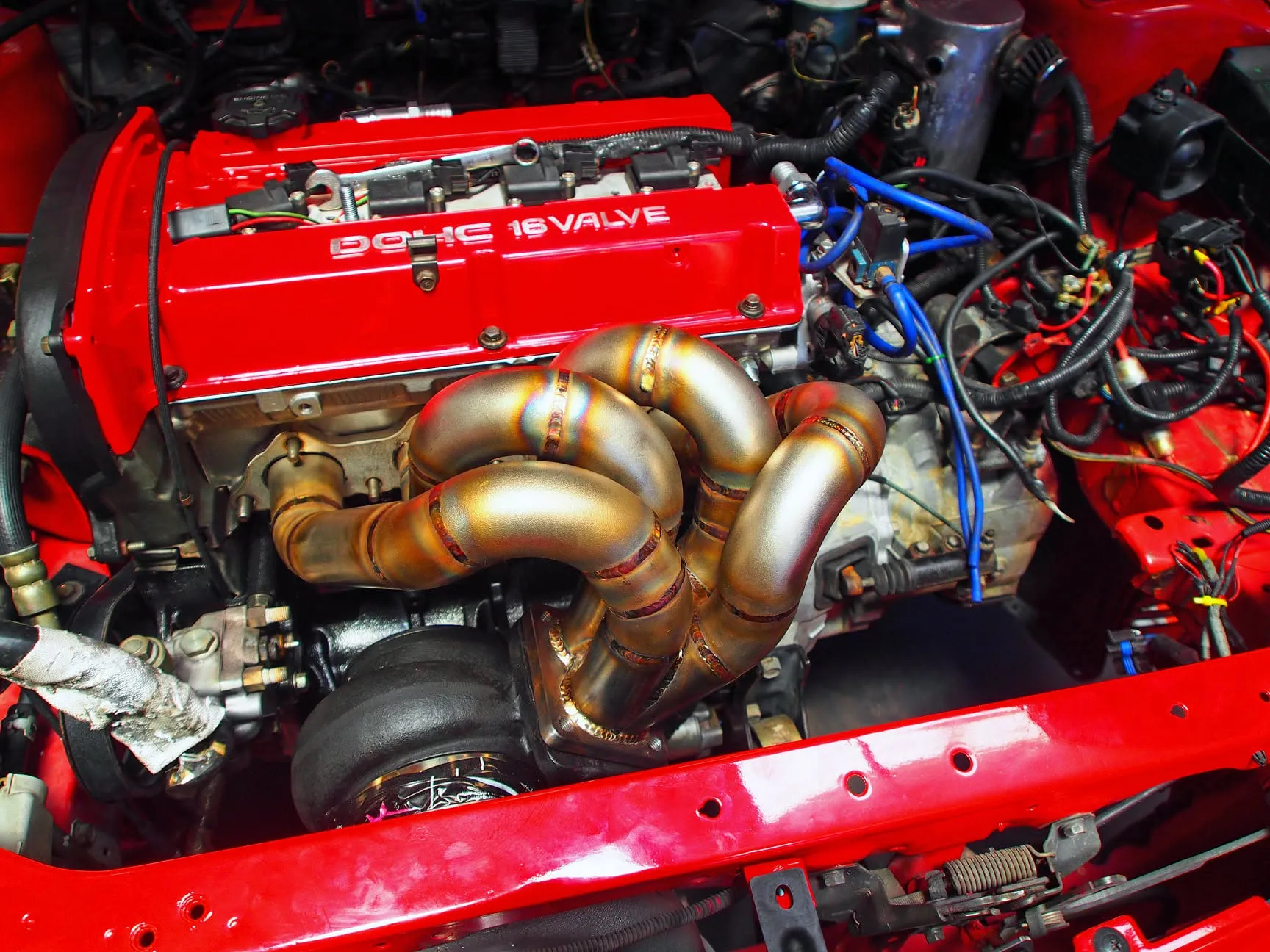
In a high-performance turbocharged engine, horsepower is heavily dictated by how efficiently you can route spent exhaust gases into the turbine wheel. The exhaust manifold is not just a routing pipe—it is the driving force behind the turbocharger itself. While vehicle manufacturers rely on heavy, restrictive, mass-produced cast iron manifolds to minimize production costs, elite tuners and professional motorsport teams turn to tubular handcrafted turbo manifolds.To understand why custom fabrication dominates the podium in forced induction applications, one must analyze fluid dynamics, kinetic energy conservation, and metallurgical structural integrity.
Fluid Dynamics: Equal-Length Runners and Eliminating Exhaust Pulse Collision
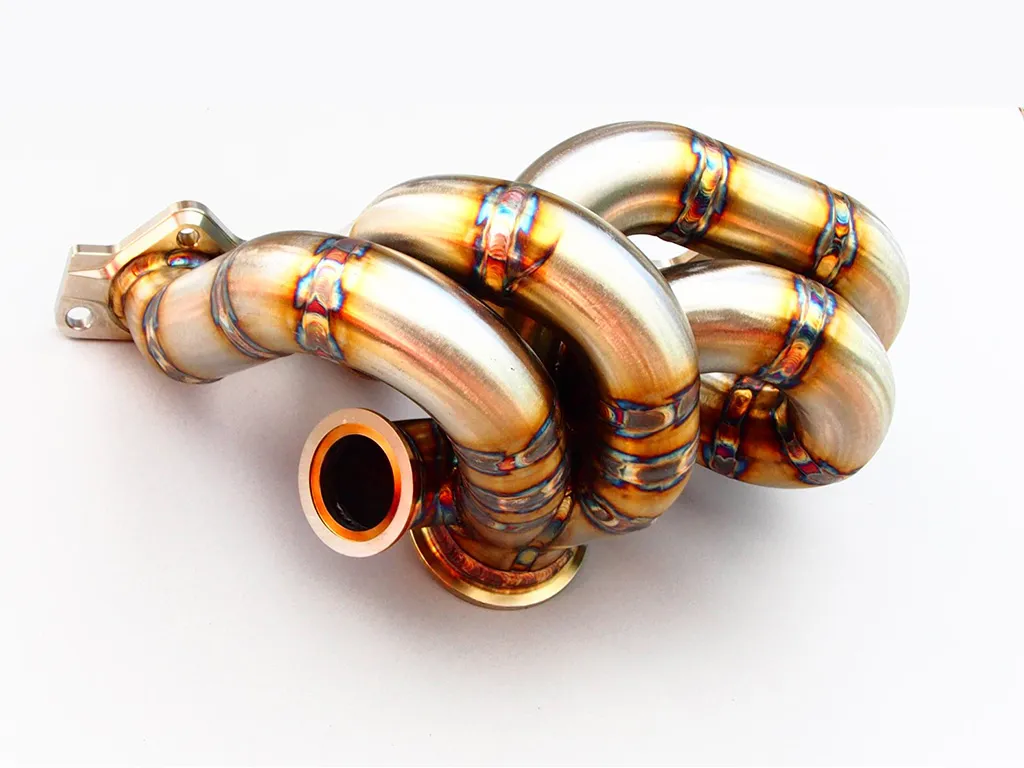
The greatest limitation of any cast iron turbo manifold is its internal geometry. Due to the restrictions of the sand-casting production process, cast manifolds are typically designed as a compact, blocky “log” layout or feature highly compromised, unequal-runner lengths. This forces exhaust pulses from different cylinders to collide with one another right before the turbo inlet, creating massive backpressure, increasing exhaust gas temperatures (EGTs), and disrupting flow velocity.
Metallurgy and Structural Rigidity: The Superiority of SS316/SS321 vs. Cheap SS304 Alternatives
Turbocharged exhaust manifolds are subjected to some of the most violent mechanical stresses in an engine bay: extreme thermal cycling (reaching over 900°C) combined with the heavy, cantilevered physical weight of a high-performance turbocharger and external wastegates hanging off the structure. Under these brutal conditions, material selection dictates whether a manifold survives or self-destructs.
- SS316 Stainless Steel: Infused with molybdenum, SS316 offers vastly superior resistance to high-temperature creep and thermal fatigue compared to inferior 304 steel, maintaining its structural integrity even when glowing red under heavy boost.
- SS321 Stainless Steel: Stabilized with titanium, SS321 is the gold standard for motorsport fabrication. The addition of titanium prevents chromium carbide precipitation during welding and high-heat operation—the exact phenomenon that makes lesser steels like 304 brittle and prone to structural failure.
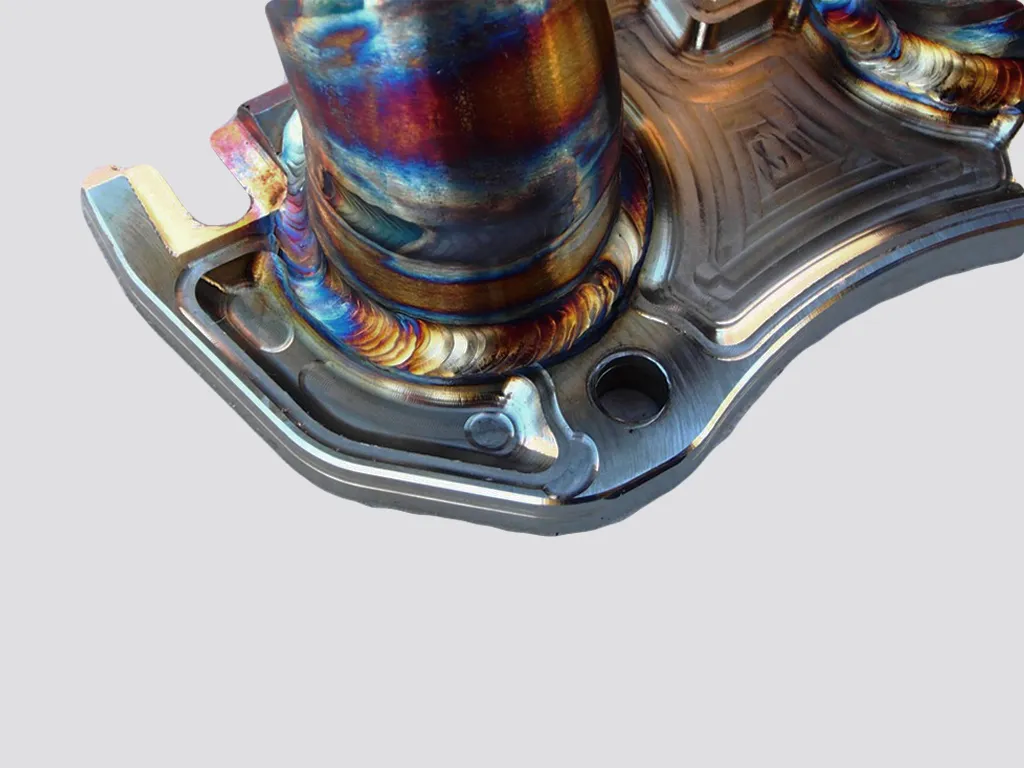
By utilizing only SS316 and SS321, fabricators ensure maximum structural rigidity. These high-quality alloys guarantee that the manifold will not deform or crack under the intense weight and leverage of the turbocharger, providing a bulletproof foundation that outlasts both cast iron and common, cheap aftermarket alternatives.
Precision Merge Collectors: Maximizing Turbine Wheel Velocity
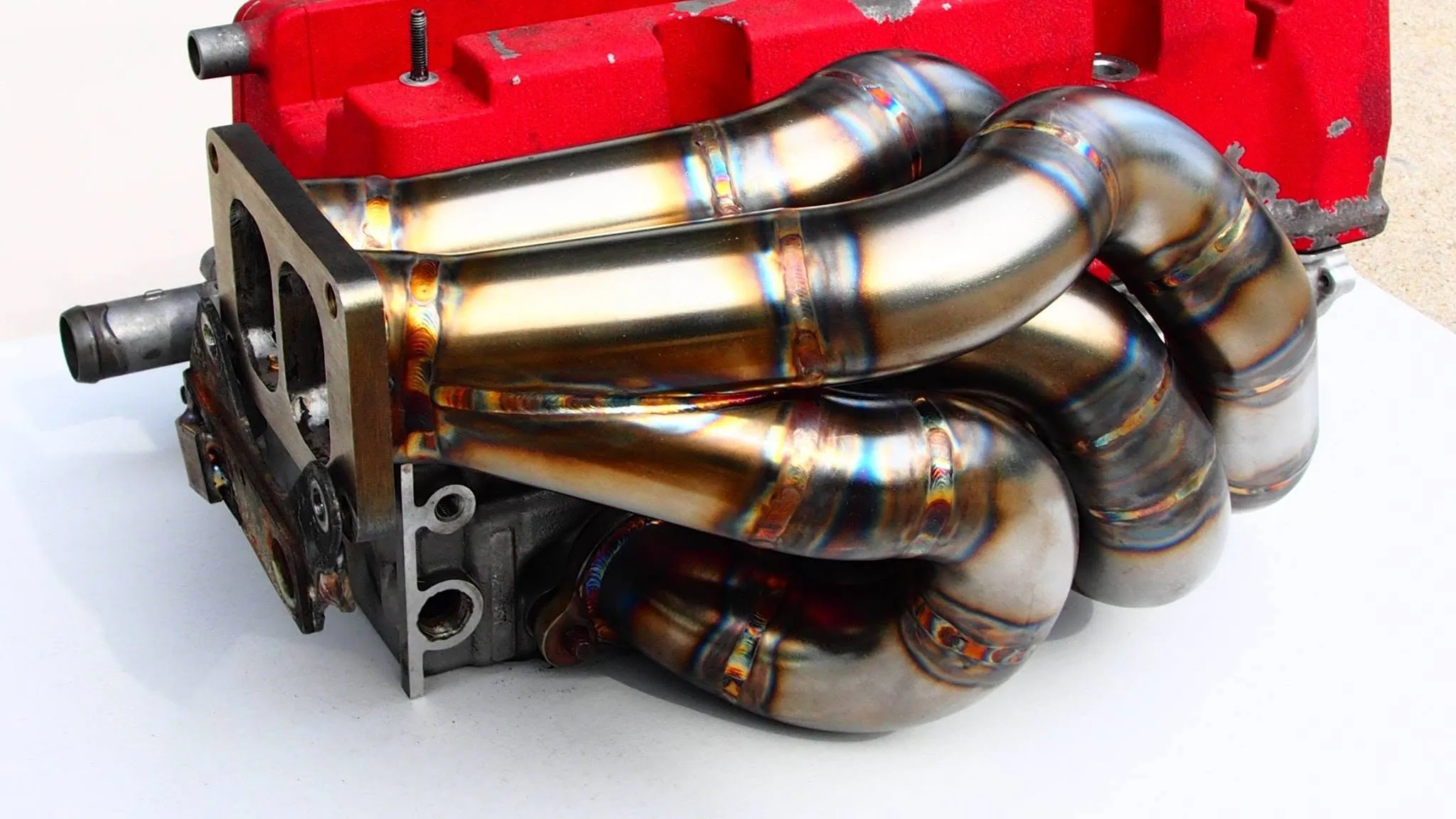
In a standard cast manifold, the transition where the individual cylinder ports meet the turbo flange is abrupt and turbulent. The internal walls are rough, featuring casting flash and sharp corners that choke the exhaust flow right at the most critical bottleneck.
Thermal Efficiency and Custom Turbo Packaging
A turbocharger is driven primarily by two things: heat energy and flow velocity. Cast iron is a massive heat sink! it absorbs a tremendous amount of thermal energy from the exhaust gas before it ever reaches the turbo. This cooling causes the exhaust gas to contract, lose volume, and drop in velocity, which hurts turbo efficiency.Tuular manifolds made from high-quality SS316 or SS321 retain less heat within their material mass relative to thick cast iron, keeping the thermal energy trapped inside the gas stream. This high thermal containment maintains the expansion and velocity of the exhaust pulse.
Conclusion: The Ultimate Verdict
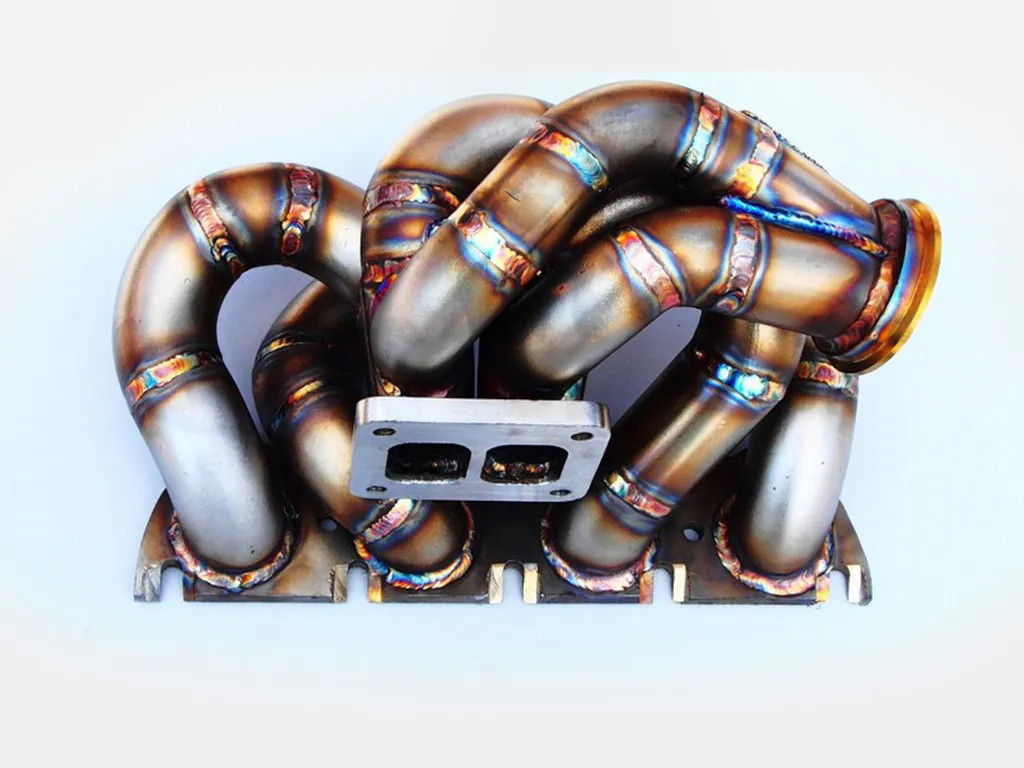
Cast iron turbo manifolds represent a compromise of high-volume mass production—they are heavy, restrictive, and built merely to survive standard parameters. However, when an engine build moves past factory specifications and seeks to maximize the efficiency of an aftermarket turbocharger, those restrictions turn into a literal wall for performance.A tubular handcrafted turbo manifold engineered from SS316 or SS321 is a fusion of metallurgical science and motorsport art. By mastering exhaust pulse timing through equal-length runners, maximizing kinetic energy with precision merge collectors, and offering uncompromised structural rigidity that defies heat and weight, a handcrafted manifold does not just connect your engine to your turbo—it unlocks the true, raw potential of your entire forced induction system.